OPALS: Global RPI
Going Global: Upscaling the Relative Productivity Index for rangeland condition monitoring and sustainable management
People:
Dr Andy Cunliffe, Dr Remy Vandaele, Isaac Nduta Mureithi, Dr Guy Lomax
Media links:
Technical approaches:
Machine learning, Image analysis & computer vision
Challenge areas:
Earth observation, remote sensing & geospatial intelligence, Land use, management & change, Agriculture & food systems, Biodiversity, ecosystems & nature
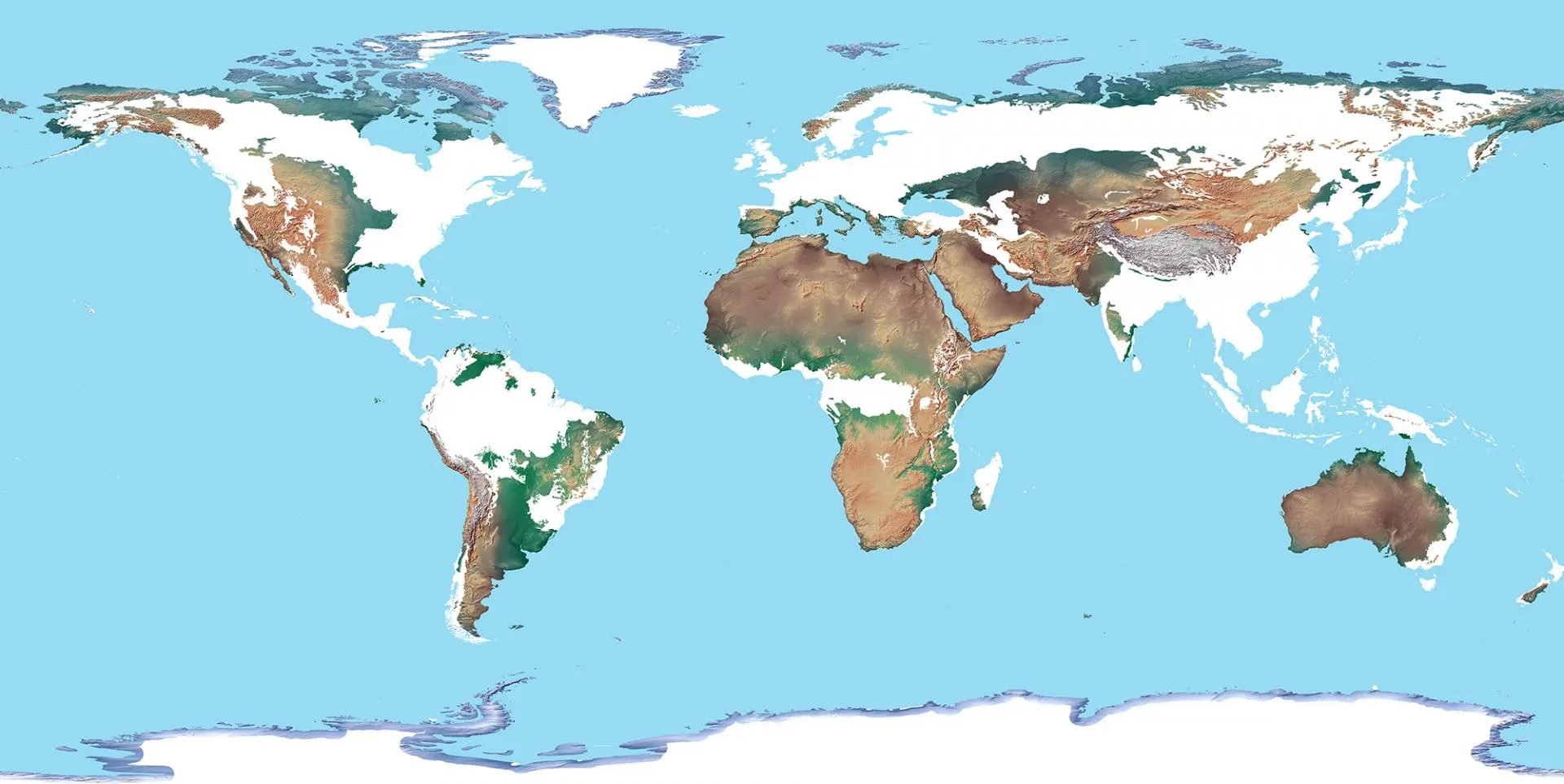
This project will develop and share a global mapping tool to help assess the condition of the world’s rangelands, which support wildlife, livestock, and the livelihoods of millions of people.
Funded by the Oppenheimer Programme in African Landscape Systems (OPALS), the project will upscale a new machine-learning approach called the Relative Productivity Index.
Rangelands are difficult to monitor because vegetation naturally varies with rainfall, soils, temperature, and terrain, making it hard to separate long-term degradation from normal environmental change. The Relative Productivity Index compares observed vegetation productivity with the productivity that could be expected under local environmental conditions. This creates a fairer and more consistent way to identify where human activities may be reducing rangeland productivity.
Early versions of the index have already outperformed commonly used monitoring methods, including rain-use efficiency and residual trend analysis. The project will refine the modelling approach, implement it in a scalable cloud-computing environment, and produce global maps at 500 m resolution for the period 2000–2023.
These open datasets will be designed for use by researchers, conservation organisations, land managers, and technology platforms working on sustainable rangeland management. By making hidden patterns of degradation and recovery more visible, the project will support better evaluation of conservation and restoration interventions, while demonstrating how AI and Earth observation can help address urgent environmental challenges at global scale.

Find out more about the OPALS Global RPI programme
Related activity